
How to Recognize a House with Renovation Upside: A Pinehurst Case Study
Buy the Location, Create the Finish: Seeing the Potential in an Older Home
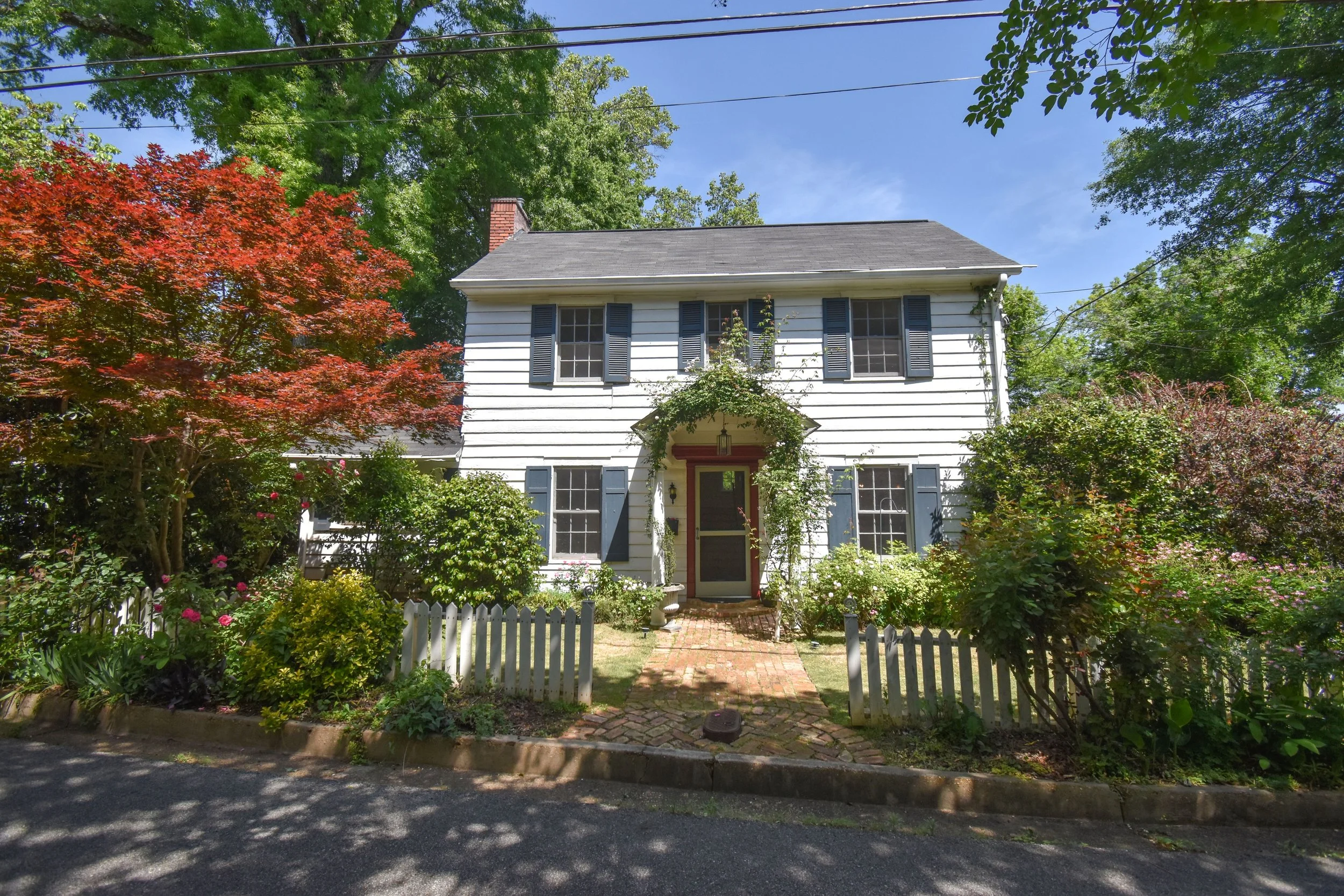
1706 3rd Street is a 3 bedroom/ 2 bath Colonial Revival home in the downtown Historic Pinehurst neighborhood. It offers character. A rare backyard. A walkable downtown location—and the opportunity to make it your own.
Step One: Start with what cannot be changed
It may sound like a cliché to say “location, location, location,” but with this property, location really is the starting point.
A contractor can add new fixtures, finishes, and upgrades. What cannot be added later is the land, the setting, or the way a house fits into its neighborhood. At 1706 3rd Street, those qualities can not be overstated. The home sits in the Pinehurst Historic District on a tree-lined street between The University of Alabama campus, downtown Tuscaloosa, and the Riverwalk. Its Colonial Revival architecture reflects the character and history of the neighborhood, while its large, private backyard offers something that is increasingly difficult to find this close to downtown.
These are the qualities that cannot be replicated. Kitchens and bathrooms can be updated. Floors can be refinished, and paint colors can be changed. But you cannot renovate a house into a better location, create another historic setting, or easily reproduce this much outdoor space near the center of Tuscaloosa.
The house already has character, livability, and a strong sense of place. For the right buyer, it is an opportunity to preserve what makes the property special while making thoughtful improvements, ultimately making the home their own and enjoying their investment. Therefore, it makes a good case study that can be applied to other historic homes in the area when they hit the market.
Step Two: Be honest about the work
I find it helpful to divide the work into three categories:
Wants: cosmetic and design choices
Maintenance: work required to preserve the property
Major systems: structural, roofing, mechanical, electrical and plumbing
Cosmetic improvements give buyers a relatively blank canvas or, in more modern terms, an opportunity to live out their Pinterest-board fantasies. This may include refinishing floors; selecting kitchen countertops, backsplashes and appliances; updating bathrooms; and choosing paint colors, fixtures and finishes throughout the house.
Deferred maintenance deserves its own category. Exterior scraping and painting may sound cosmetic, for example, but the work can uncover siding that needs to be repaired or replaced. An older roof may still be performing, but its age could mean that replacement should be included in the buyer’s longer-term budget.
Major systems and the parts of the house not visible during a traditional tour require a closer look. A general home inspection is the starting point, but for an older property, I often recommend bringing in qualified specialists to evaluate the roof, foundation, HVAC, electrical, and plumbing systems. Buyers should request any available records of repairs and replacements made during the sellers’ ownership and obtain estimates for significant concerns.
The purpose is not to make an older house risk-free. No inspection can do that. The goal is to understand the likely scope of the work, build in a reasonable contingency, and decide how much cost and uncertainty the buyer is comfortable accepting.
Step Three: Remember A Homeowner’s Approach to a Renovation is Different than an Investor Who Wants to Flip
A flipper generally needs the renovation's value to show up quickly because the goal is profit and a calculated Return on Investment (ROI). An owner-occupant buyer should evaluate the opportunity differently. They are buying a home to live in, improving it for their own use and enjoying those improvements over what may be many years.
In the case of 1706 3rd Street, the home buyer has a wider view of a renovation ROI and it includes:
Lifestyle return
Enjoyment of renovated kitchen, baths, floors, backyard, as well as the location and downtown lifestyle throughout the ownership period.Equity potential
Thoughtful improvements may improve the property’s marketability and value. Over a longer holding period, the owner may also benefit from loan principal reduction and broader market appreciation (please note that neither renovation returns nor appreciation are guaranteed).Scarcity value
Pinehurst’s location and the size and privacy of this backyard cannot be easily replicated. The finishes can be changed; the land and location cannot. Over time, scarce attributes may help the property remain desirable relative to more readily available alternatives.
That does not mean the numbers no longer matter. The purchase price and renovation budget to be reasonable in relation to the property’s likely finished value. But every dollar does not have to produce an immediate dollar-for-dollar return. Part of the return is getting to live in a place that reflects a personal vibe while also building equity.
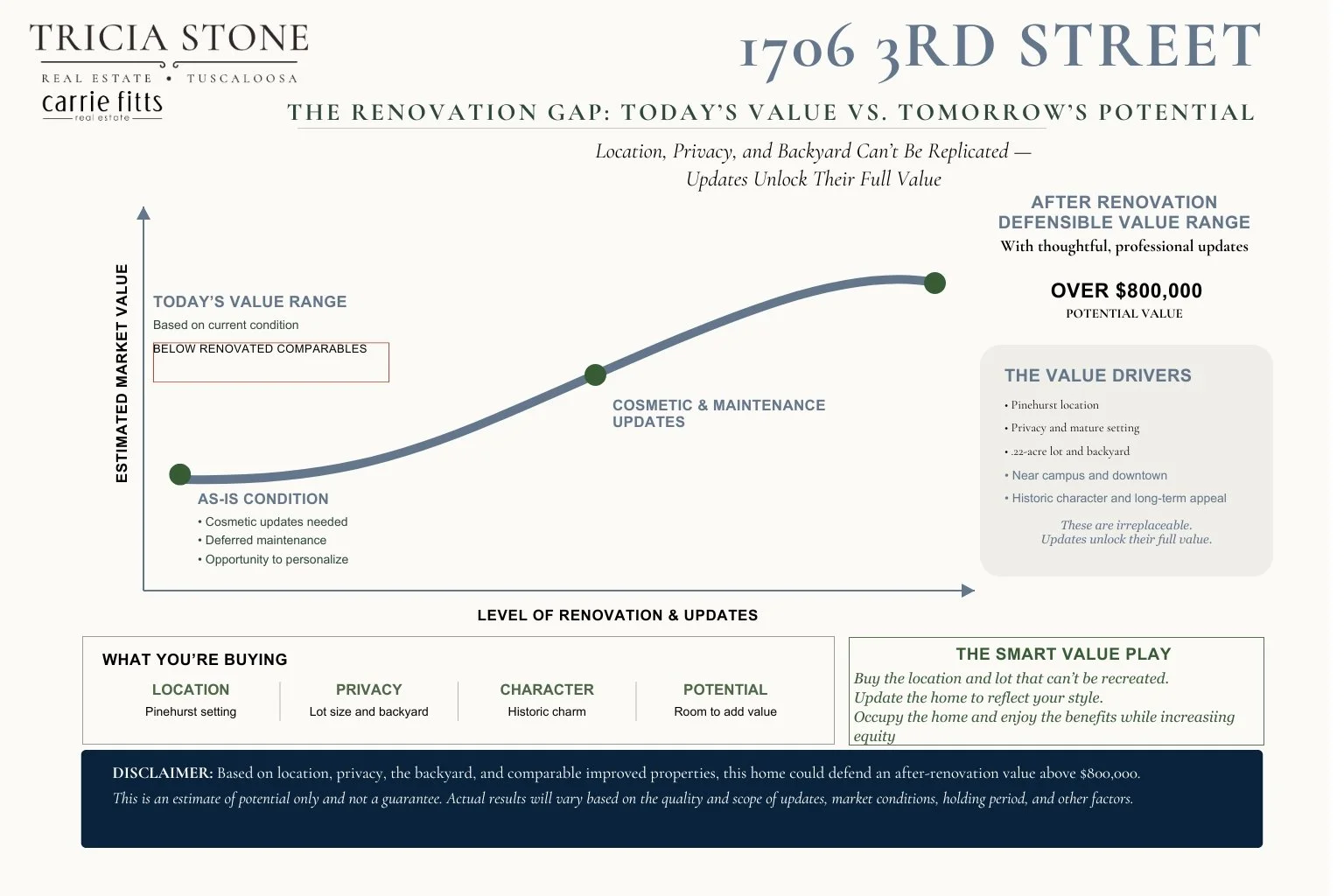
The upside of a renovation should be measured by the purchase price plus cosmetic, maintenance, and system needs. But for a buyer who is going to occupy a property for a period, the value of enjoying their own improvements, the benefits of the lifestyle the house, location, and setting bring, and the scarcity of the property should also be considered.
Step Four: Study the Comps
Online listings make it easy to see what has sold nearby in the last year and is similar in square footage and layout. I also recommend that buyers and their agents look at the neighborhood to understand the location premium.
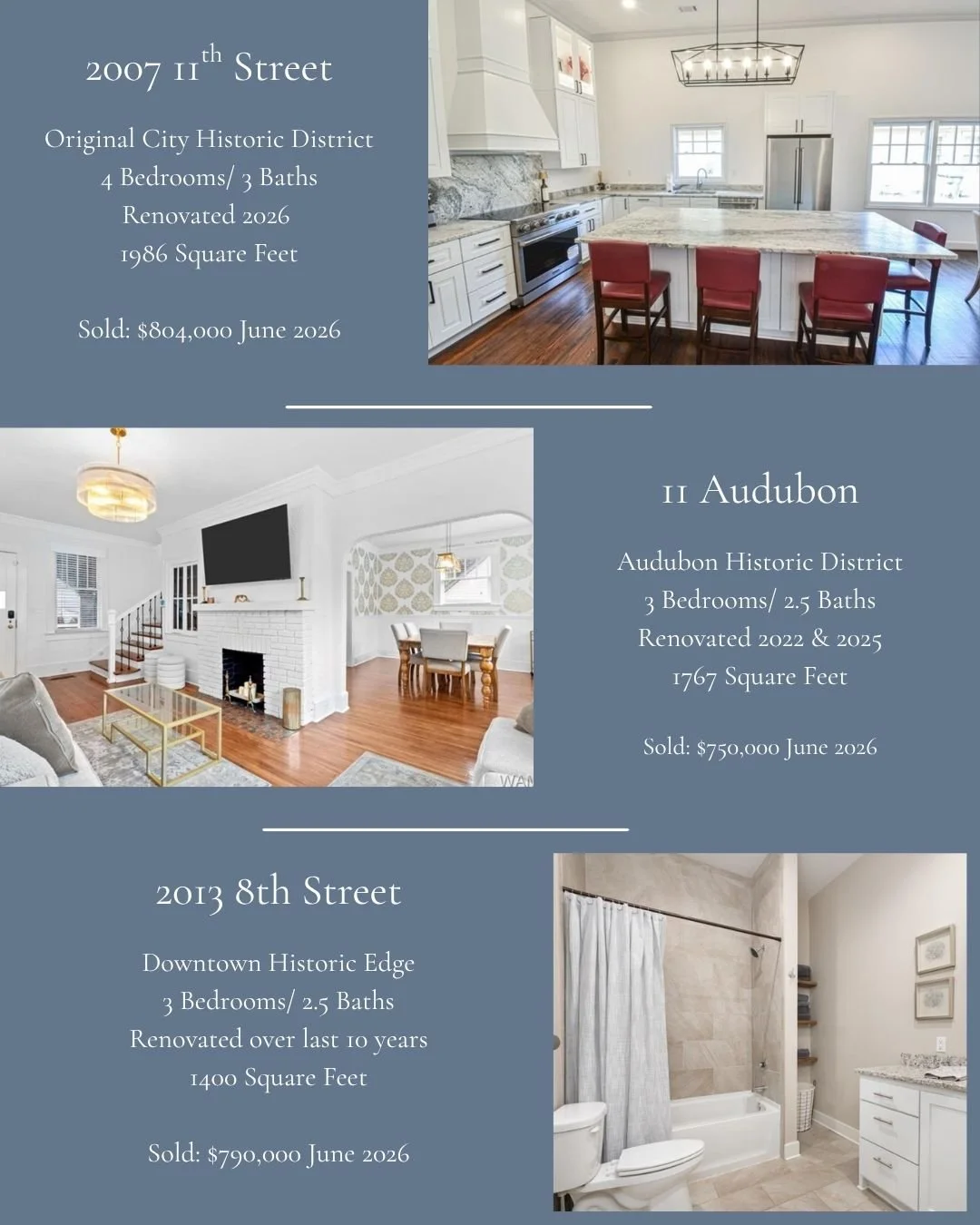
Above are three comps that have recently sold that have a similar square footage and layout as 1706 3rd Street.
Comparable sales provide a snapshot of where the market is today, and the features and improvements buyers are currently rewarding.
For an owner-occupant, the goal is not to prove that every dollar spent on renovation will produce an equal dollar of immediate after-renovation value. Instead, the comparisons help a buyer evaluate whether the purchase price and planned investment are reasonable within the current market so they can decide how much cost, uncertainty, and risk they are comfortable assuming.
Renovating an historic home usually makes more sense when the buyer expects to stay long enough to enjoy the improvements and absorb transaction costs, renovation costs, and short-term market fluctuations over time.
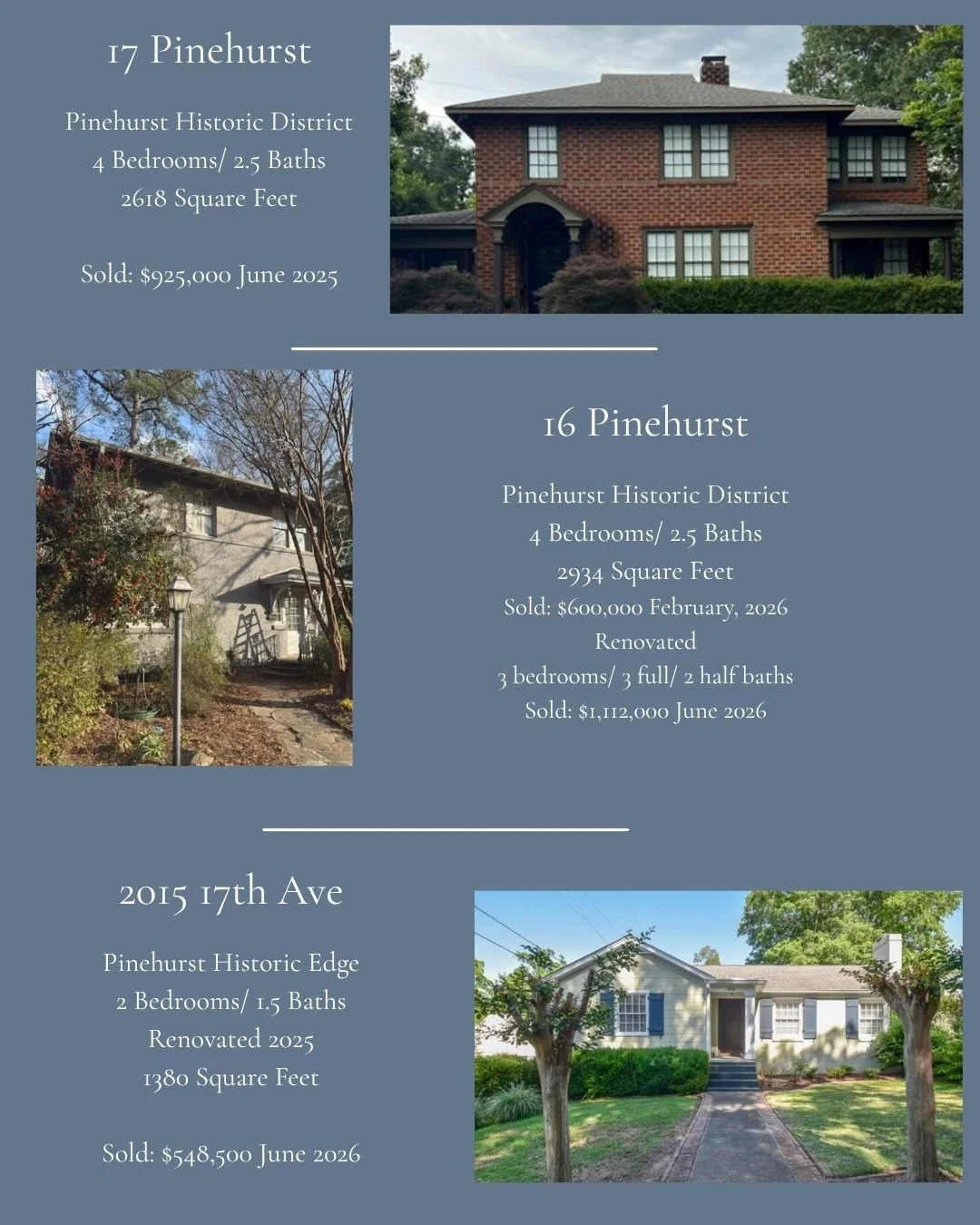
Recent sales in Pinehurst, including an off-market sale for a complete renovation, point to the upside of Pinehurst’s location premium.
Step Five: So What is Next?
If you are considering 1706 3rd Street, or another home with renovation potential, let’s look at the opportunity together. I can help you run the numbers, explore possible floor-plan changes or additions, compare the property with what the local market is rewarding, and identify the questions to take to inspectors, contractors, and City officials.
The goal is not to eliminate risk. It is to make the costs, possibilities, and uncertainties more visible so you can decide if the house and the project are right for you.
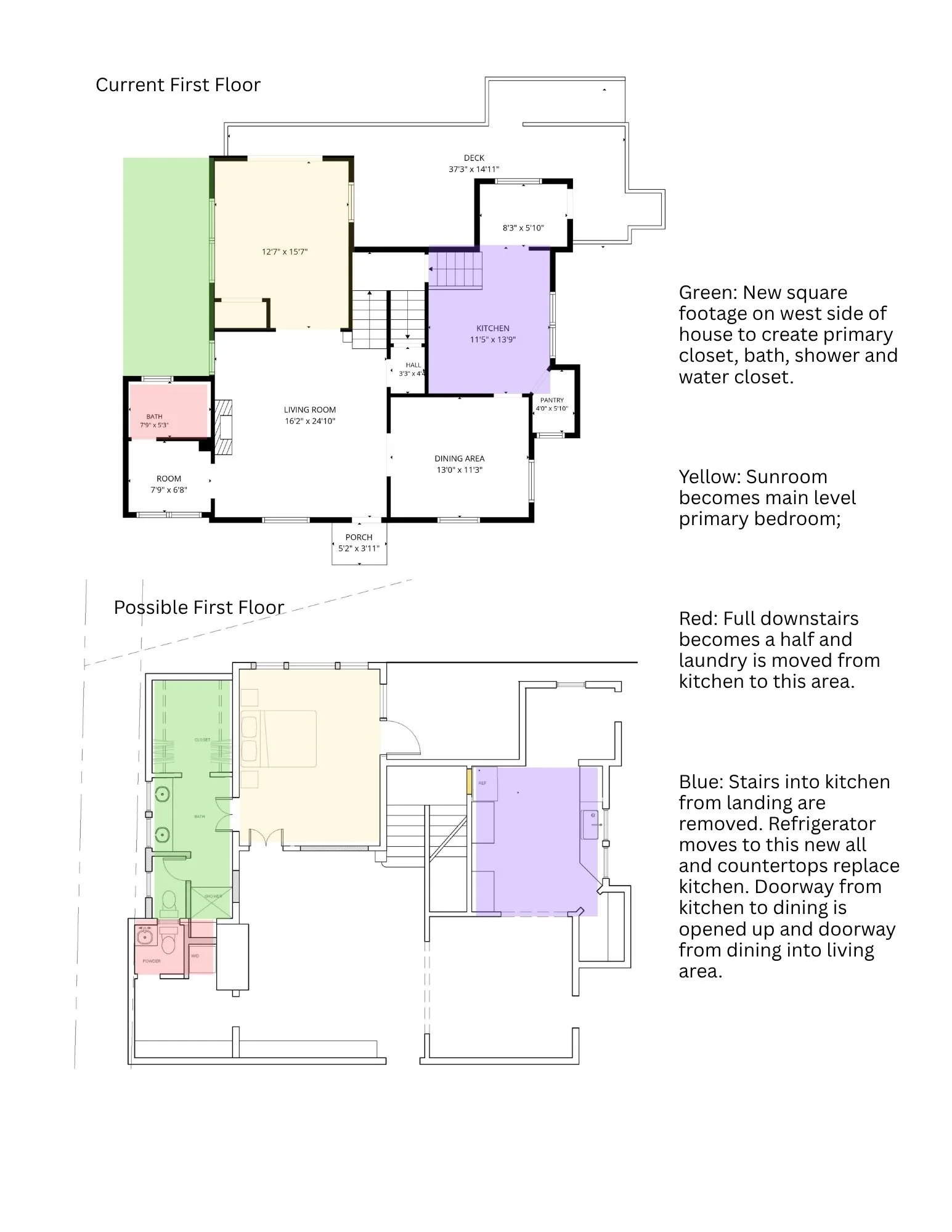
Sometimes with an older home, the solution to add value without a lot of expense can be to reimagine space to reflect today’s living preferences while also maintaining the character of the house. In the first-floor example, a primary suite has been added to the main floor, a downstairs half bath is retained, laundry is moved from the kitchen area and the floor plan on the east side of the house is opened up by moving appliances and widening entrances.