
Investing in the Community
As a Realtor, selling properties comes with the title, but it’s not enough to just talk about Tuscaloosa. If I want you to invest in Tuscaloosa, I need to invest as well. That is why I am passionate about our community from many different angles — non-profit agency activity, community college support, historic preservation and placemaking, civic participation, and UA Parent support. Recently, I was featured in Tuscaloosa’s Capstone Living, where I got to tell my story about why Tuscaloosa is so important to me.
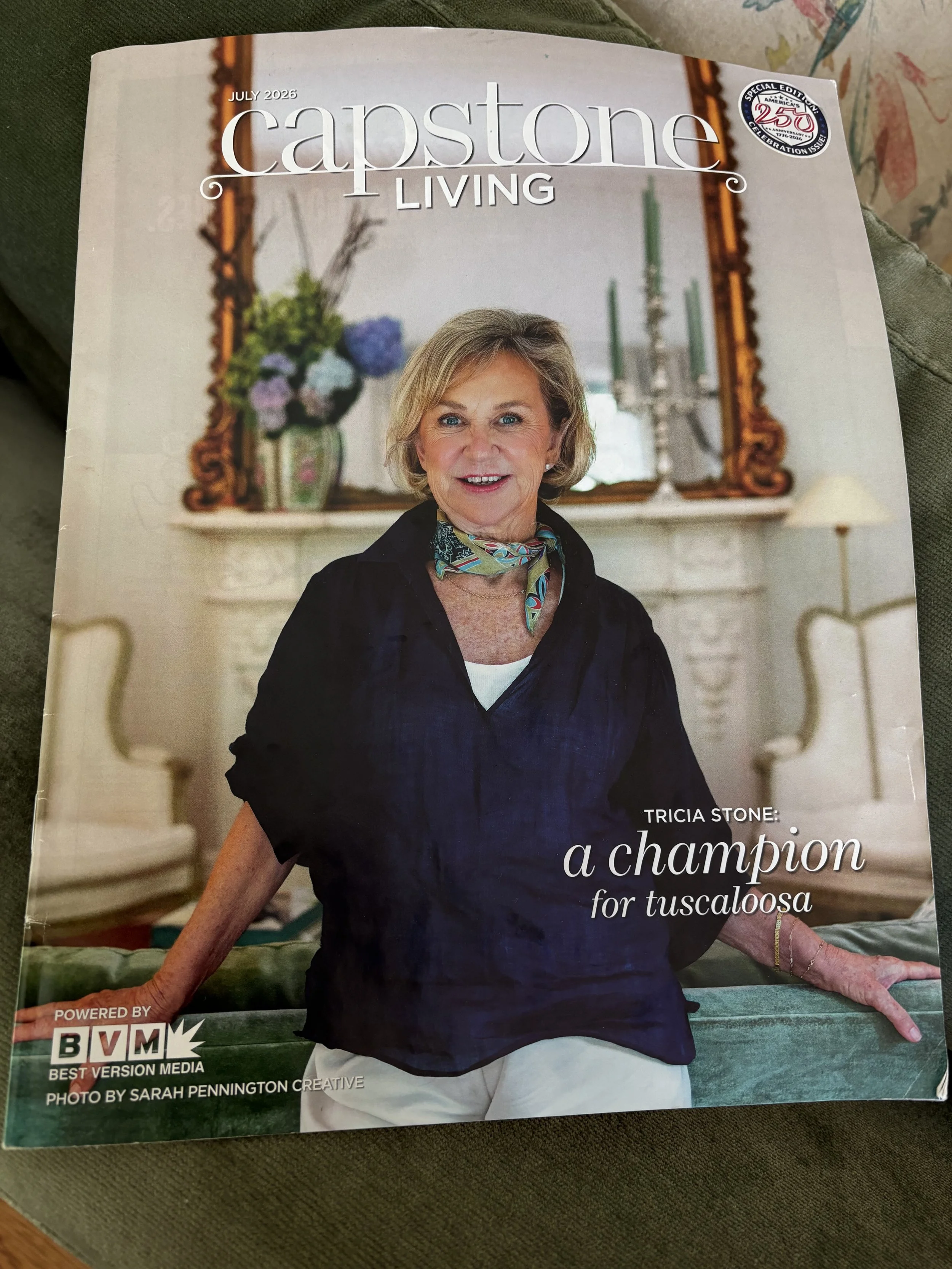
Capstone Living August 2026: reprinted with permission by BVM
A CITY THAT NEVER REALLY LET HER GO
Some people leave a place and spend years trying to find their way back. Others leave, convinced they've outgrown it, only to discover the place never really left them at all. For Tricia Stone, Tuscaloosa has been both a destination and a constant thread woven through generations of family history. Although she grew up in Bay Minette, Alabama, trips to Tuscaloosa were a regular part of childhood. Her parents would bring older siblings back to the University of Alabama or reconnect with lifelong friends on game weekends. What she remembers most isn't just the campus or the football games-it's the relationships.
"Those trips taught me about community," Tricia says. "I saw how friendships and connections could span generations." At the time, she couldn't have known that those early visits would shape so much of her future. Like every generation of her family since the University of Alabama was chartered, Tricia eventually became a student there herself. Her ancestor, Sardine Graham Stone, was among the University's earliest students, establishing a family connection that has continued through generations. His son, Frank Stone, was later connected to the famed Eliza Battle riverboat tragedy, a piece of Alabama folklore later immortalized in 13 Alabama Ghosts and Jeffrey.
After earning her undergraduate degree, she assumed Tuscaloosa would remain a fond chapter in her rearview mirror. Life, however, had other plans. She returned for graduate school in journalism, worked in Sports Information, and later joined the National Alumni Association as manager of chapter development. Through those experiences, she discovered a different side of Tuscaloosa-one beyond campus life.
"As a graduate student and young professional, I was able to engage with the community in ways I hadn't before," she says. "I started to understand what makes a city work."
After several years in Birmingham, Tricia found herself drawn back to Tuscaloosa for reasons beyond nostalgia. "What I love about Tuscaloosa is that it's one large community," she explains. "Your zip code doesn't become your identity."
That sense of connectedness reminds her of the small-town values she grew up with in Bay Minette, where neighbors worshiped together, attended school together, and participated in civic life side by side. It's a perspective that continues to shape how she sees her role in the city today.
HOME, HISTORY, AND A DOWNTOWN LIFE
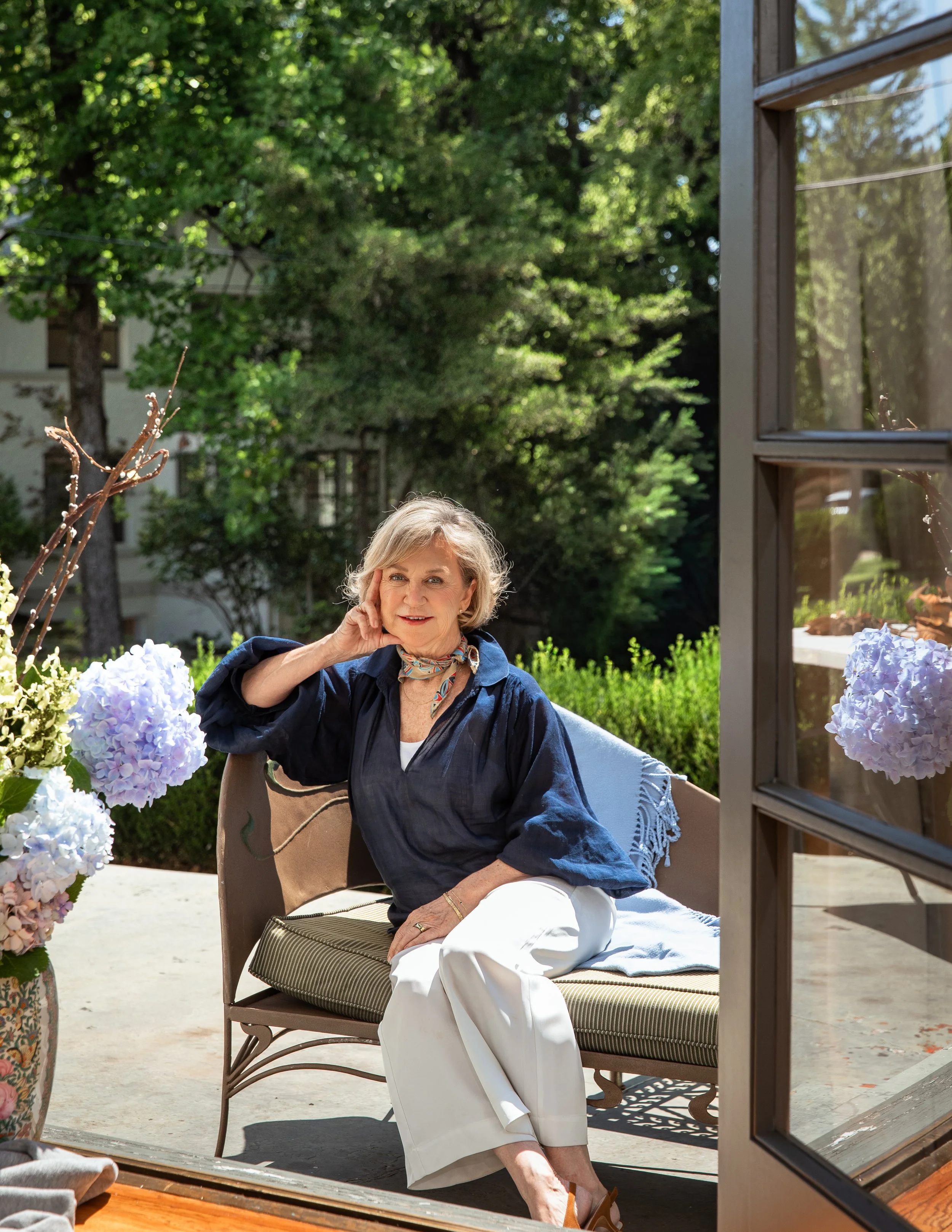
From Pinehurst, you can hear Denny Chimes and the roar of Saban Field at Bryant Denny Stadium.
These days, Tricia lives downtown in the historic Pinehurst neighborhood, in a house she first visited more than 30 years ago while serving as a Preservation Week tour guide. The home's giant mirror remains exactly where it was then.
"I always tell people I bought a mirror and the house came with it," she laughs.
Once owned by interior designer Chris Glover, the home was already known for its character and distinctive design long before she moved in.
The home reflects more than her appreciation for history. It also reflects her passion for preserving and strengthening the community she loves.
Living downtown has deepened Tricia's interest in placemaking-the idea that thoughtful development creates stronger communities and economic opportunity. That passion has led to involvement with the City's Historic Preservation Commission and the Original City Association.
"I believe downtown Tuscaloosa is a huge economic driver for the rest of the city and it must be managed and developed with that in mind," she says.
She is equally appreciative of the accessibility and responsiveness of Tuscaloosa's elected officials and administrators, something she believes sets the city apart.
Her commitment to service extends well beyond downtown development, drawing her to organizations that make a tangible difference in people's lives. She serves on the foundation board for Shelton State Community College because of the school's role in developing and retaining talent across West Alabama.
Her dedication to the board of ARC of Tuscaloosa comes from an even closer, more personal place.
"I have a special-needs nephew," she says. "I know firsthand the work the staff of ARC does is invaluable to the families of the consumers they serve as well as the consumers themselves."
RHYTHM OF LIFE IN TUSCALOOSA
Tricia doesn't hesitate when asked about her favorite hobby. "Work," she says with a smile.
Fortunately, she genuinely loves it. Her work in real estate aligns with her passion for communities and the way they evolve.
"I don't just sell real estate, I sell Tuscaloosa," she says.
When she does slow down, her days take on a familiar rhythm-walks along the Riverwalk, time spent thinking through design ideas, browsing historic properties, and evenings cooking for friends who often become part of the conversation around her table.
But fall Saturdays shift everything.
Like many in Tuscaloosa, her routine revolves around Alabama football. Home games bring the sound of the stadium drifting across downtown. Away games bring a different ritual: pacing, staying close to the screen, and ironing cloth napkins-a tradition she jokingly calls her personal "Iron Bowl."
What began as nervous energy has become habit: crisp stacks of pressed linens marking every big play, momentum shift, and nail-biting fourth quarter. It's a tradition that has become as much a part of game day as the football itself.
TRADITION AND THE MOMENTS THAT STAY WITH YOU
Each year, downtown's neighborhood Christmas celebration brings families together when Santa arrives by golf cart. Tricia serves as Santa's chauffeur, helping create memorable moments as children receive personalized giftspnd hear their names called.
"The looks on their faces are what it is all about," she says.
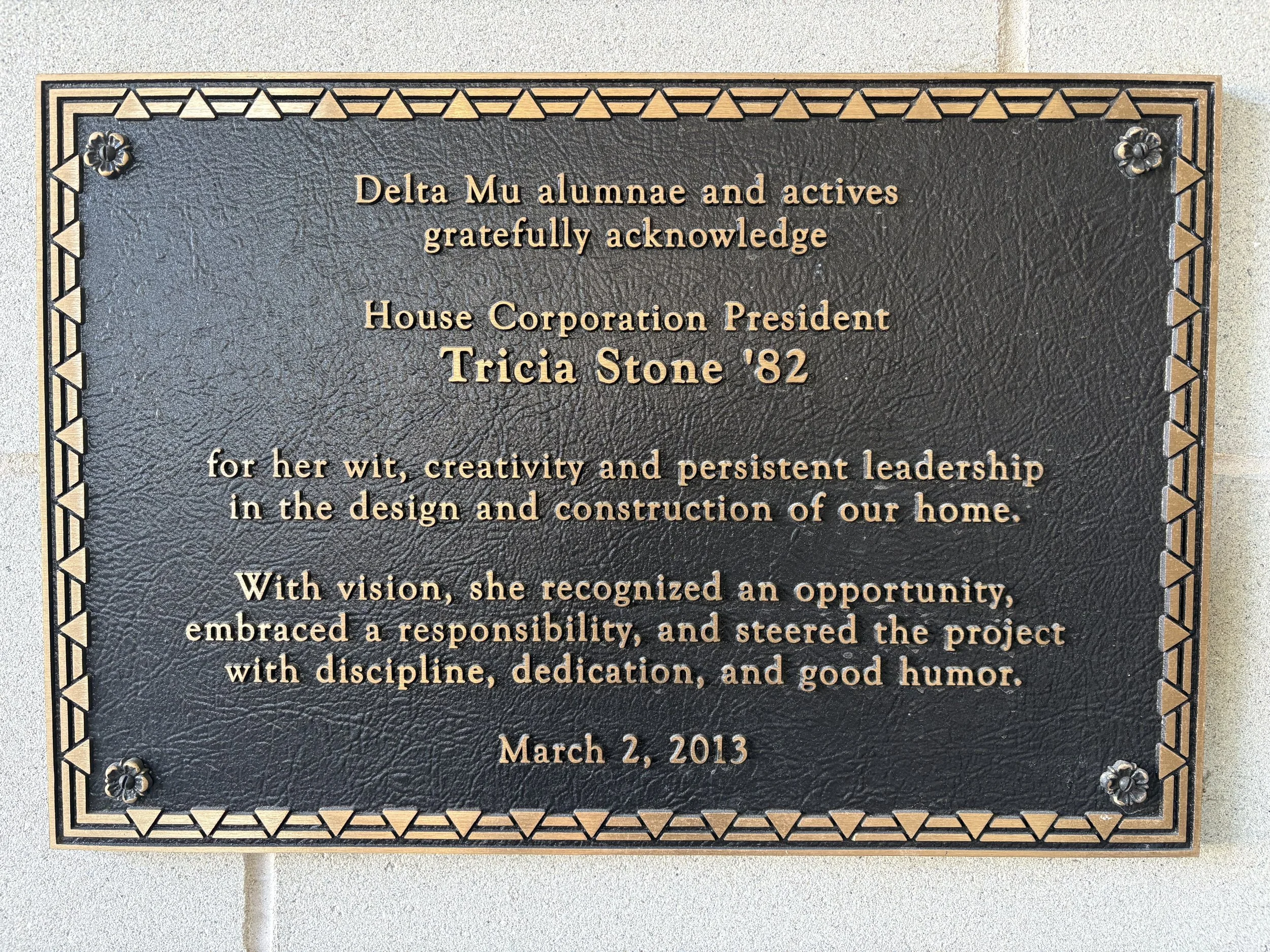
The Tri Delta house was one of the first four new sorority houses constructed in 2012. Following the construction of DDD, Alpha Gam, ADPi and DG, other sororities followed suit.
Creating memorable experiences and strengthening community connections has been a common thread throughout much of Tricia's life. One of her proudest accomplishments was helping lead the planning and construction of a new Delta Delta Delta house alongside University leaders, alumnae, a_nd design professionals.
"The University gave us the opportunity to build a new house, and I had-a great mentor, Steve Malin, who said, 'Tricia, we are going to blow this out of the water,"' she recalls with a laugh. They did-somuch so that the University eventually asked them to scale
the project back. The finished result came in under budget and helped set a new standard for sorority housing on campus.
"That was a group effort that involved a lot of people," she says. "But it was fun to be at the forefront of something and now see the impact it made on campus."
A STEADY CHAMPION FOR A CHANGING CITY
Tricia Stone didn't plan on making Tuscaloosa her forever home, but the unique warmth of the community completely changed her trajectory. Today, her impact can be felt everywhere from the historic streets downtown to the grand campus landscape.
For someone who once thought Tuscaloosa was behind her, she has become one of its most steady champions-someone who understands not just where the city has been, but the care it takes to shape where it is going next.